

Why doesn’t the best team on paper always win?
A recent poll from a professor at Harvard Business School caught my attention.
The question asked what organisations prioritise most when building teams:
Individual skills and talent
Chemistry
Backgrounds
Working styles
Unsurprisingly, the overwhelming majority chose individual skills and talent.
It immediately made me think about football teams, basketball teams, Hollywood blockbusters and teams in the business world.
The highest-performing teams and films are rarely made up entirely of A-grade talent (with perhaps one famous exception that immediately comes to mind: the 1992 U.S. Olympic Basketball Dream Team.
The best coaches, leaders and casting directors understand something important:
Performance is about fit, balance and role clarity - not just assembling the biggest names.
Sometimes an A-player disrupts team dynamics.
Sometimes a B-player elevates everyone around them.
And often, it’s the role players who create the stability that allows others to perform at their best.
The famous film called Moneyball is a great example. Firstly the film had two 'A-player' stars in Brad Pitt and Jonah Hill, but the entire story is about building a winning team without relying soley on superstar talent.
I’ve seen the same pattern repeatedly in business.
The strongest teams I’ve built, partnered with or recruiter for usually had the right balance of:
consistently high performers
cultural leaders who set the tone
adaptable people willing to play different roles
and leaders who understood that chemistry matters just as much as capability
The gap between the best team on paper and the best team in reality is often leadership.
More specifically, it’s the ability to transition from exceptional individual contributor to effective team leader.
That shift requires understanding that success is no longer measured by how you perform as an individual, but by how well the team performs together.
More than a decade ago, I stepped into a larger leadership role and inherited an under-performing team.
My coach, who was based overseas in a very different environment, shared a simple but effective framework (similar to the image below - although his version used with a more detailed breakdown and with much more direct language!).
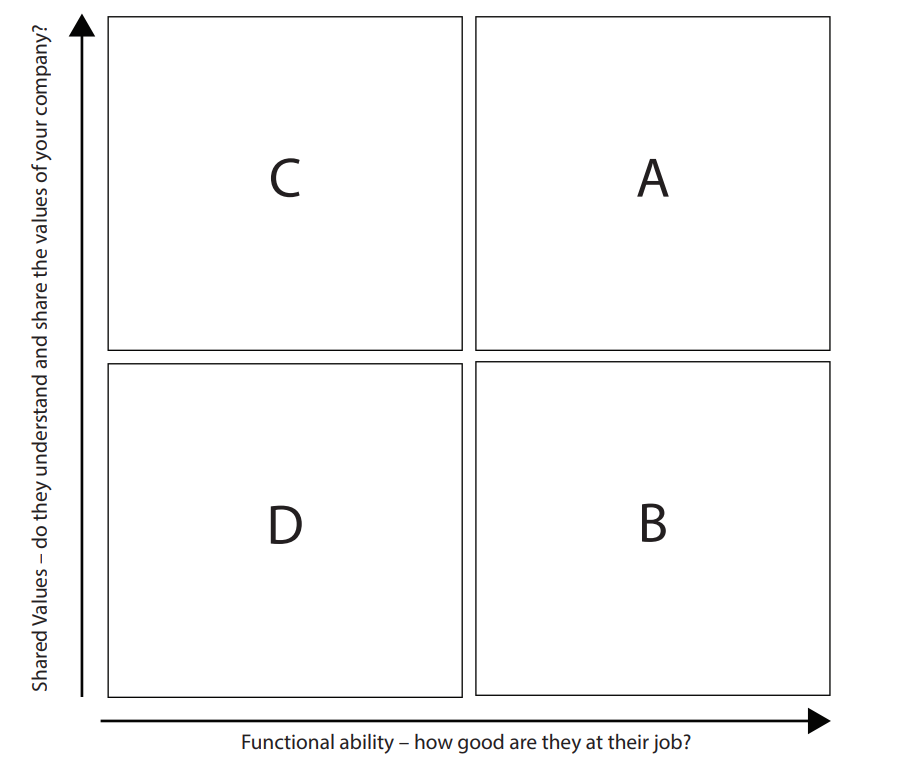
Example only
The exercise was straightforward:
Map each team member against the framework. Identify the gaps. Then focus on re-balancing the team through development, hiring in advance and role design.
It was one of the first times I truly understood that building high performance is as much about team architecture and forward planning as it is about individual talent.
Kurt Gillam works with leaders and organisations to develop high-performing teams, strengthen leadership capability and improve business performance.
For more articles, insights or a discussion about how we can assist you or your business, feel free to get in touch or follow https://www.linkedin.com/company/intentgroupau/
